



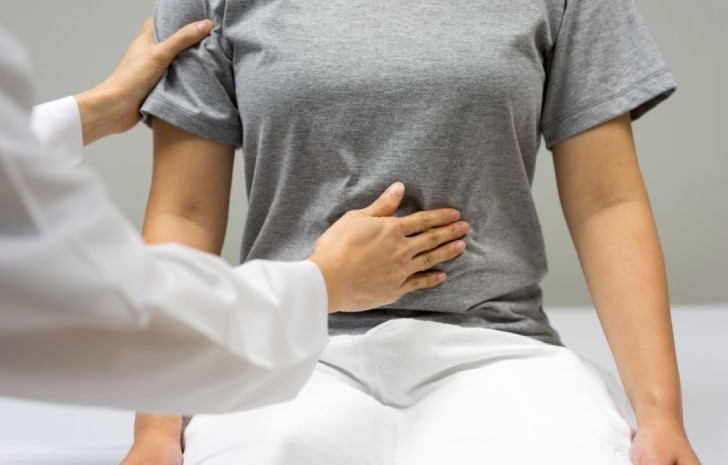
Endometriosis, a health problem that appears in many women, is a painful chronic disease that can cause severe physical and psychological problems. There are forms of endometriosis that settle in the ovary, in the membrane covering the abdomen, and deep forms of the disease.
Deep infiltrating endometriosis involves the posterior wall of the uterus, the large bowel, the bladder and the ureter, and the pelvic, sciatic and sacral nerves; it can be described as endometriosis foci penetrating 5 mm or deeper into these tissues. While endometriosis foci of 1-2 cm may give no sign at all under normal conditions, they can cause very severe pain when they settle in deep areas. It is also known that in this group of patients the diagnosis is often missed and can take many years (10 years or more).
Symptoms and Diagnosis of Deep Endometriosis
Although the symptoms of deep endometriosis vary according to the area in which it develops, they can be listed as very severe period pain, painful urination and painful defecation during the period, pain during sexual intercourse and inability to conceive.
Deep endometriosis can cause obstruction of the bowel, severe pain during defecation, complaints of gas and constipation. In patients with bowel involvement, abdominal bloating that looks like pregnancy during menstruation, pencil-thin stools and attacks of diarrhoea and constipation are frequently seen. By causing obstruction of the ureters it can lead to silent loss of the kidney (kidney failure), and when it affects the ovaries and tubes it can lead to infertility.
When it is not very severe or widespread, deep endometriosis can be difficult to detect. Until the 2000s the diagnosis was made by surgery (laparoscopy); the methods that help in diagnosing deep endometriosis include rectovaginal examination during the menstrual cycle, ultrasonography, pelvic magnetic resonance imaging (MRI), rectosigmoidoscopy, double-contrast enema and IVP. Today the national association (the Endometriosis & Adenomyosis Association) and the international societies (ESHRE – the European Society of Human Reproduction and Embryology) do not recommend the tumour markers measured in blood (CA-125). In special situations tumour markers such as HE-4 can be used in diagnosis and follow-up.
Treatment of Deep Endometriosis
Hormonal treatments such as progestins and GnRH agonists are effective in reducing the pain caused by deep endometriosis. However, there is a possibility that the pain will return when the treatment is stopped.
Endometriosis located between the vagina and the rectum can be treated surgically. Before laparoscopic treatment the bowel must be properly prepared and the patient must be informed in detail about the surgical procedure to be performed and about the period afterwards. In the treatment of patients with endometriosis located between the vagina and the rectum, the preferred method is the removal of all nodules by a surgical procedure.
Because of the high recurrence rates in deep endometriosis and because it cannot eliminate the disease completely, drug treatment is often insufficient. The surgical method to be applied should be determined individually, focusing on the method that will benefit the patient most. The main reason for surgery is generally pelvic pain.
To relieve pelvic pain the most important point is that no diseased tissue is left behind and that all organs are restored to their normal anatomy. The main aim is to make the lesion visible and remove it completely, performing the surgery so that no endometriosis focus is left behind. What most reduces the development of complications during and after surgery is whether the operation is carried out by an experienced endometriosis team.
Unless there is a reason not to, endometriosis surgery is performed as closed surgery. Closed surgery allows the tissues to be seen magnified and makes it possible to recognise and remove even small foci. In closed surgery both laparoscopic surgery and robotic surgery are applied successfully.
Prof. Dr. Taner Usta
Director of the Multidisciplinary Endometriosis Centre of Excellence,
Acıbadem Altunizade Hospital.