



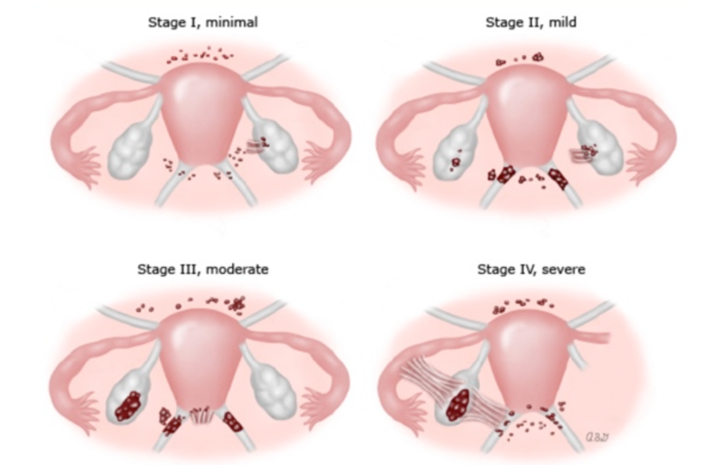
Endometriosis is a condition in which cells similar to endometrial tissue grow outside the uterus and usually cause pelvic pain. The stages of endometriosis are classified according to how widespread and how deep the disease is. According to the classification proposed by the American Society for Reproductive Medicine (ASRM), endometriosis is divided into four main stages:
- Stage I – Minimal endometriosis: at this stage there may be a few isolated endometrial lesions and/or minimal adhesions.
- Stage II – Mild endometriosis: there may be more lesions and/or adhesions, but in general these lesions and adhesions are superficial and limited.
- Stage III – Moderate endometriosis: at this stage there may be more endometrial lesions and deeper adhesions are present. Endometriomas (ovarian endometrial cysts), known as chocolate cysts, may also be found.
- Stage IV – Severe endometriosis: this is the most severe stage and involves deep endometrial lesions, extensive adhesions and usually large endometriomas in both ovaries.
The stage of endometriosis does not directly reflect the severity of the symptoms; in other words, the stage of the disease and its severity are not always parallel. A person with mild endometriosis may experience more pain than a person with severe endometriosis. Diagnosis and treatment are tailored to the individual’s symptoms, age, treatment preferences and plans for having children.
At Which Stage of Endometriosis Is Diagnosis Important?
Diagnosis is important at every stage of endometriosis. However, the first signs of endometriosis are usually non-specific and can easily be confused with other conditions. Diagnosis in the early stages allows:
- Early treatment: treatment strategies can be applied to slow the progression of the disease and relieve the symptoms.
- Pain management: early treatment can help prevent chronic pain and discomfort.
- Reducing the risk of infertility: endometriosis has been linked with infertility. Early diagnosis and treatment can protect a woman’s chance of conceiving in the future.
- Preventing complications: early diagnosis can prevent endometriosis from spreading to deeper tissues or organs.
- Improving quality of life: early management of the symptoms can raise women’s quality of life.
Because endometriosis often causes no symptoms in the minimal or mild stages, diagnosis is difficult and time-consuming. However, if a woman shows signs of endometriosis (for example pelvic pain outside the period, severely painful periods, pain during intercourse, painful defecation, abnormal menstrual bleeding) she should consult a gynaecologist experienced in endometriosis.
It is generally said that a surgical procedure called laparoscopy is required for the definitive diagnosis of endometriosis, but thanks to today’s advanced imaging methods the diagnosis can be made without an operation. This applies to every woman with symptoms, regardless of the stage of the disease. For this reason women who show signs of endometriosis are advised to seek medical help, whatever the stage.
Does Endometriosis Make Daily Life Difficult?
Yes, endometriosis can make daily life difficult for many women. Its effect varies from person to person, but some common symptoms and problems are:
- Chronic pain: endometriosis can cause pelvic pain. This pain can get worse during the period, but in some women it continues all month. Chronic pain can make daily activities, work and social activities difficult.
- Sexual pain: endometriosis can cause pain during intercourse (dyspareunia), which can have a negative effect on personal relationships.
- Fatigue: many patients with endometriosis experience chronic fatigue.
- Infertility: endometriosis can lead to infertility. This can be a major source of worry for women planning to have children.
- Psychological effects: chronic pain can reduce quality of life, which in turn can lead to depression, anxiety and other mental health problems.
- Digestive problems: some women may experience pain during bowel movements, nausea or constipation.
- Interruptions to work and education: attacks of pain can keep women away from their work or studies.
- The burden of treatment: treating endometriosis can require continuous medical supervision, medication or surgery, which creates additional difficulties and costs.
A multidisciplinary approach is required to manage the effects of endometriosis. This can include pain management, hormonal treatments, surgical procedures, physiotherapy, mental health support, nutrition and other treatment approaches. Early diagnosis and treatment can help manage the symptoms and improve quality of life.