



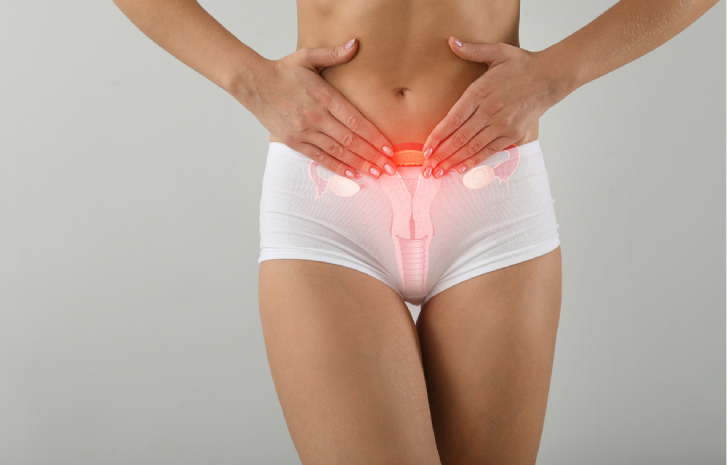
Endometriosis is a health problem that arises when tissue similar to the endometrium, the inner lining of the uterus, begins to grow outside the uterine cavity, in places such as the ovaries and the fallopian tubes.
Endometriosis, which can affect women of all ages, occurs when endometrium-like tissue grows in the ovaries, in the bowel or in the tissues lining the pelvis. It arises when endometrial tissue spreads beyond the pelvis. Endometrial tissue growing outside the uterus is called an endometrial implant. Because endometriosis tissue is affected by the menstrual hormones, it grows cyclically and causes bleeding.
As a result it can also cause tissue reactions, adhesions, inflammation and cysts in the area where it is located. In the long term it can lead to the formation of painful nodules and to organs sticking to one another. Because of the damage it causes to tissues, endometriosis is also regarded as one of the most important causes of infertility.
Which Areas Outside the Pelvis Can It Involve in the Abdomen?
There is almost no organ it does not involve: the large bowel, the small bowel (especially the ileocaecal region, which is why this area is very important in patients with endometriosis), the spleen, the liver, the diaphragm, the kidneys and the ureter. It should be stressed, however, that involvement of these organs is very rare. Although this is a good thing, it is also the reason why the diagnosis is often missed. For a correct and early diagnosis, involvement by endometriosis must be kept in mind.
The Causes of Endometriosis
Although the exact cause of endometriosis is not yet known, retrograde menstruation is accepted as one of the possible causes. With the menstrual bleeding that occurs every month, the endometrial tissue lining the inside of the uterus is expelled from the body.
When this bleeding, which normally occurs through the vagina, flows backwards, endometrial tissue passes through the fallopian tubes into the abdominal cavity, settles on the organs there and causes endometriosis. Genetic predisposition is also accepted as one of the causes. The transformation of normal tissue into endometriosis because of hormones or immune factors, and the transport of endometrial tissue to other parts of the body through the blood or lymph vessels, can also cause endometriosis.
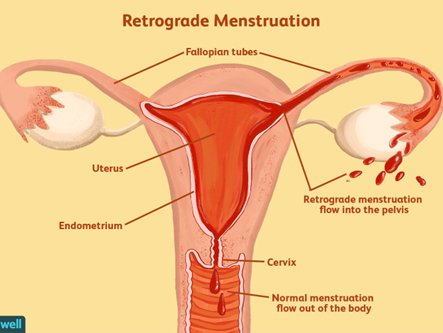
The image above shows a schematic drawing of retrograde menstruation, one of the important theories about how endometriosis develops.
The Symptoms of Endometriosis
The most common symptom of endometriosis is chronic pain, usually during the period and during sexual intercourse. Later on, continuous abdominal pain begins to appear independently of the period. Severe pain is likewise felt during the gynaecological examination. In cases where endometriosis affects the bowel, obstruction and pain during defecation can be seen. When the bladder is affected, complaints of burning and blood in the urine can occur. The damage endometriosis causes to the reproductive organs is regarded as one of the most important causes of infertility. In some patients, however, endometriosis may give no symptoms at all.
In endometriosis, the adhesions and hardening caused by endometrial tissue settling on or around the tubes can reduce the mobility of the tubes and thereby cause infertility. The prevailing view is that endometriosis tissue settling in the ovaries and causing adhesions may also disturb the maturation of the egg cell.
In the past, laparoscopy was the most important method of diagnosis and treatment for endometriosis in most patients; today, thanks to advanced imaging methods and the interdisciplinary work of the endometriosis centres active in this field, the diagnosis can be made in most patients without an operation. Mastery of the subject is very important.
For example, if an endometriosis specialist suspects diaphragmatic endometriosis, a contrast-enhanced diaphragm MRI with special sections (covering in particular the planes where endometriosis frequently involves the diaphragm) is requested from the radiologist. With standard imaging the diagnosis in these patients is unfortunately often missed. The same applies to endometriosis of the bowel, the kidney and the ureter.
Prof. Dr. Taner Usta
Director of the Multidisciplinary Endometriosis Centre of Excellence,
Acıbadem Altunizade Hospital.